The digital marketing landscape has crossed a definitive threshold. Search is no longer limited to typing short queries and scrolling through ten blue links on a search results page. Today, users ask full-sentence questions to AI engines like Google Gemini, ChatGPT, Perplexity, and Claude—and they expect immediate, synthetic summaries.
If your digital growth plan relies on outdated tactics—like exact-match keyword stuffing or publishing thin, repetitive blog posts—your organic visibility is likely slipping.
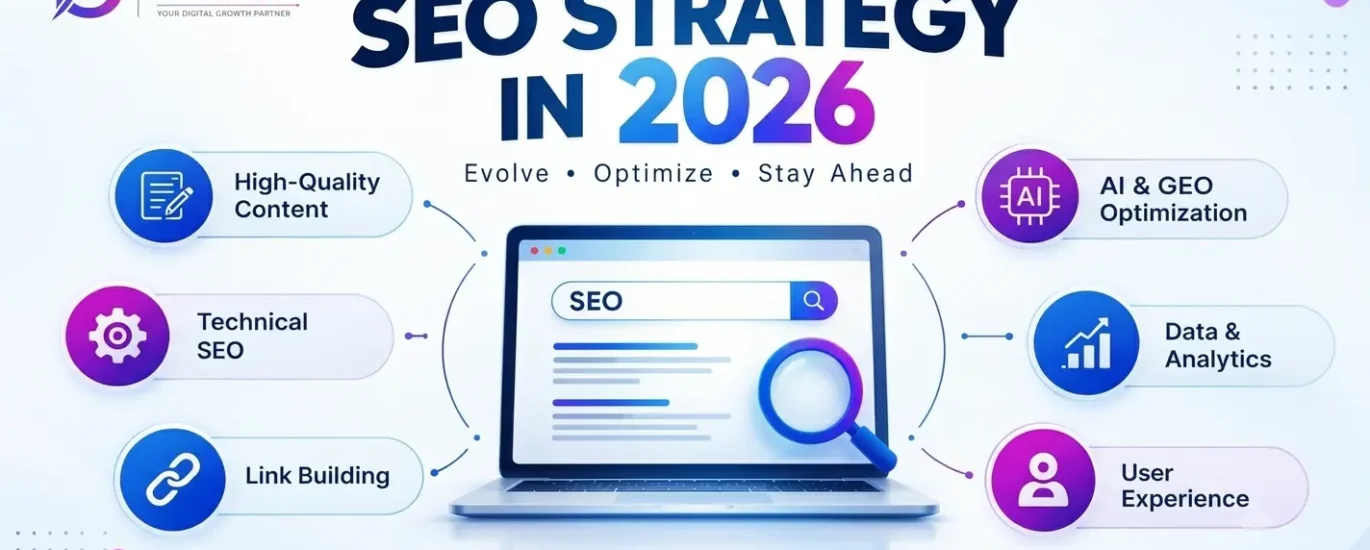
To win search traffic today, you need a forward-looking SEO strategy in 2026. You must optimize for classic search engine crawlers while positioning your brand to be cited inside AI-generated answers. This guide walks you through the step-by-step framework to build a resilient search and optimization plan.
1. Shift from Keywords to Entity SEO and Search Intent
For over two decades, search optimization centered almost entirely on exact-match phrases. Modern search engines now process broad concepts, relationships, and entities.
Master Entity SEO
Entity SEO focuses on uniquely defined topics, organizations, people, places, and concepts—and how they connect. Instead of viewing a web page as a collection of isolated words, search algorithms evaluate how well your site explains the underlying entities in your niche.
- Traditional Method: Creating multiple low-value pages targeting “affordable SEO,” “cheap SEO services,” and “low-cost SEO packages.”
- Modern Entity SEO Method: Building a comprehensive resource hub on Digital Marketing Services that naturally connects your business entity to related concepts like Technical Audits, Schema Markup, Local Visibility, and ROI Measurement.
Map Content to Modern Intent
Searchers today submit conversational, highly detailed prompts. Organize your content around three distinct intent levels:
- Informational Intent: Direct, clear answers to complex industry questions.
- Comparative Intent: Transparent side-by-side breakdowns, pricing structures, and feature comparisons.
- Transactional Intent: Clear conversion pathways, real-world case studies, and distinct calls to action.
2. Implement Generative Engine Optimization (GEO)
Generative Engine Optimization (GEO) is the practice of structuring web content so that Large Language Models (LLMs) quote, synthesize, and cite your brand as an authoritative source in AI Overviews.
Traditional SEO Goal —> Rank #1 on Google Search SERPs
GEO Goal —> Get Cited & Summarized in AI Answers
Key Tactics for AI Search Optimization
To make your pages easily digestible for both humans and AI models, apply these core formatting principles:
- Bottom Line Up Front (BLUF): State the direct answer or main takeaways in the first two sentences beneath each heading before diving into detailed explanations.
- Use Clear Transition Phrases: Use lead-ins like “In short,” “The direct takeaway is,” or “The core finding shows.” AI systems reliably extract these statement anchors.
- Publish Proprietary Data & Quotes: AI engines favor unique insights, original research, and direct expert commentary. Summarizing existing web articles is no longer enough to get cited.
- Structure with Scannable Formatting: Organize key points into bulleted lists, summary tables, and clear Q&A blocks that AI tools can easily parse.
3. Strengthen E-E-A-T (Experience, Expertise, Authoritativeness, & Trust)
Google and AI algorithms heavily emphasize E-E-A-T: Experience, Expertise, Authoritativeness, and Trustworthiness. In an era flooded with generic automated content, verifiable real-world experience is your primary competitive edge.
Google E-E-A-T ka correct structure:
- E — Experience: Real-world experience
- E — Expertise: Knowledge and skills
- A — Authoritativeness: Industry recognition
- T — Trustworthiness: Reliability and trust
Practical Ways to Build E-E-A-T:
- Showcase Author Credentials: Include detailed author bios featuring real-world achievements, credentials, and links to author profiles.
- Share Practical Proof: Embed original case studies, client results, behind-the-scenes photographs, and verified business outcomes.
- Align Brand Information: Ensure your business name, address, phone number (NAP), and leadership details remain consistent across LinkedIn, Google Business Profile, directories, and social platforms.
4. Prioritize Technical SEO & Structured Schema Data
Technical health remains the foundation of your search presence. If crawlers encounter roadblocks on your site, even exceptional content will fail to perform.
Essential Technical Checklist:
- Schema Markup (JSON-LD): Structured data serves as a universal translator for AI search engines. Implement Schema for Organization, LocalBusiness, Article, FAQPage, Product, and Service.
- Core Web Vitals: Pages must load quickly and maintain layout stability. Aim for sub-two-second load times by optimizing images, streamlining code, and utilizing fast server hosting.
- Mobile Responsiveness: Ensure layout alignment, clean touch targets, and fast rendering across all mobile screen sizes.
- Clean Crawl Architecture: Conduct routine technical audits to fix broken links, trim unnecessary redirects, resolve orphaned pages, and eliminate indexation bottlenecks.
5. Build Topical Authority with Content Hubs
Publishing standalone, disconnected posts rarely yields sustained authority. Instead, organize your site structure into Topical Content Hubs.
- Pillar Page: A comprehensive, high-level guide covering a broad topic in detail.
- Cluster Pages: Targeted supporting articles diving into specific subtopics (e.g., Schema Implementation, Page Speed Optimization, Local Google Business Profile Strategies).
- Strategic Internal Linking: Use descriptive anchor text to link cluster pages back to the central pillar page. This signals complete, end-to-end subject mastery to search crawlers.
6. Measure Success with Modern Search Metrics
Rank tracking alone no longer captures the full picture of your organic reach. With zero-click searches and AI-generated answers becoming common, your reporting must focus on performance metrics that tie directly to growth.
| Traditional SEO Metrics | Modern SEO & GEO Metrics |
| Single Keyword Position (#1 Rank) | AI Search Citations & Inclusion Rate |
| Raw Website Traffic / Pageviews | Qualified Leads & Direct Conversions |
| Total Backlink Count | Entity Mentions & Brand Authority |
| Exact Keyword Impressions | Organic Revenue & Business Growth |
Why It Makes Sense to Combine SEO & GEO
- Better Return Over Time: Organic visibility continues working long after the initial effort, reducing your dependence on costly paid ad campaigns.
- Higher-Quality Leads: Reach prospective clients at every stage—from early intent research to the moment they are ready to make a purchasing decision.
- Enhanced Credibility: Appearing on page one of search results and inside AI-generated summaries positions your brand as a trusted authority.
- Compounding Growth: Paid ad traffic disappears as soon as ad spend stops. A strong SEO and GEO foundation creates long-term organic leverage.
Let YOM Groups Handle the Heavy Lifting
Keeping pace with algorithm changes, shifting search behaviors, and fast-evolving AI engines is a full-time commitment. That is precisely where YOM Groups comes in.
Our team designs resilient search strategies—from comprehensive technical audits and targeted local campaigns to advanced GEO optimizations that help your brand get cited across search platforms and AI tools.
👉 Want to evaluate how your site performs in traditional search and AI environments?
Get in touch with YOM Groups today for a free SEO and content audit!
AI search shifts user behavior toward direct answers and citations. Combining traditional SEO with Generative Engine Optimization (GEO) ensures your brand gets cited in AI Overviews as well as ranked in organic search.
GEO is the practice of structuring content so Large Language Models (LLMs) quote and cite your brand as an authoritative source in AI-generated direct answers.
By optimizing their Google Business Profile, targeting hyper-local keywords, collecting verified customer reviews, and keeping NAP (Name, Address, Phone) details consistent online.
With AI generating massive amounts of content, search engines prioritize real-world experience, expert author credentials, and original research to establish trust.
Fast-loading pages improve user experience, reduce bounce rates, and ensure crawlers can index your website efficiently without wasting crawl budget.